
Keep repeat growth within a planned cycle
Old points respected
We inspect established pollard heads before deciding where regrowth is removed.
Heavy shoots managed
Repeat cutting prevents regrowth becoming steadily larger and harder to control.
Appearance explained
You know why the first finish looks bare and how new shoots will develop.
Maintain a tree already managed by pollarding
Pollarding is a repeated management method, not a general name for making any tree much smaller. Regrowth is cut back to established pollard points at suitable intervals, helping to control the crown produced from those points. As shoots lengthen and thicken, their increasing weight can make a delayed cycle more awkward to manage. We inspect the previous cutting positions, current regrowth and overall condition before planning the work. Tree species, age and the time since the last cycle all matter. If a tree has never been pollarded, another form of crown management may be more appropriate.
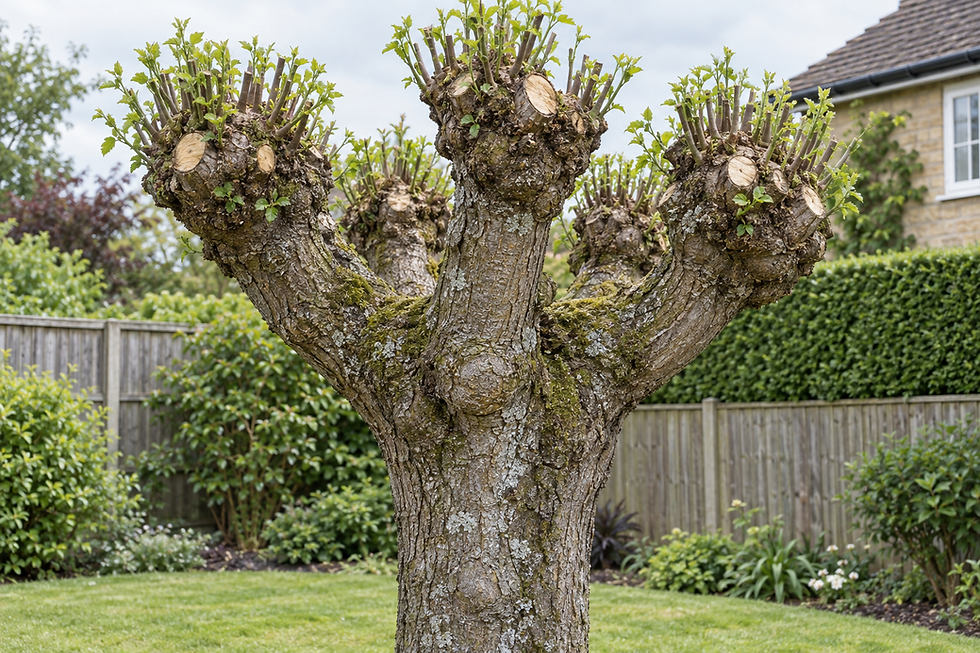

Expect a stark finish before shoots return
Freshly pollarded trees can look bare immediately after cutting. New shoots then develop from the established points, beginning the next cycle. We explain that appearance in advance so the result doesn't come as a surprise. Pollarding also differs from topping, which makes severe cuts without managing an established framework, and from a one-off crown reduction that follows suitable branch unions through the canopy. For a pollarded tree in Selsey, information about earlier work is helpful. Old photographs, previous timing or visible cutting points can all support a more informed maintenance plan.
Frequently asked questions
Can any overgrown tree simply be pollarded?
No. Pollarding is usually most suitable where a tree already has established pollard points or where a carefully planned new regime is appropriate. Species, age, condition and structure must be considered before this treatment is proposed.
How often does a pollarded tree need cutting?
There isn't one interval for every tree. Species, growth rate, branch weight and the established management history all influence timing. We inspect the regrowth and previous points, then explain when the next cycle may sensibly be reviewed.
Is pollarding the same as crown reduction?
No. Pollarding repeatedly removes regrowth to established points. Crown reduction decreases the height or spread through selected branch unions while retaining a broader canopy framework. The correct method depends on the tree's history and desired result.