
Keep useful shade while managing scale
Balanced reduction points
We select suitable branches to avoid blunt cuts and a needlessly harsh outline.
Size goals made clear
You can discuss the height, spread or volume that needs practical attention.
Regrowth considered
We explain why the reduced crown may need future review as new growth develops.
Reduce a large crown but retain the tree
A canopy can become too broad for its setting, place heavy growth at branch ends or begin to crowd buildings and boundaries. Tree crown reduction selectively decreases height, spread or overall volume while retaining a balanced outline. We assess the tree before deciding where suitable reduction points lie and how much live growth can reasonably be removed. Cuts are made back to appropriate branches rather than simply taking the top off. The result should relate to the tree's natural form and the space available, with the intended percentage or dimensions discussed before work begins.
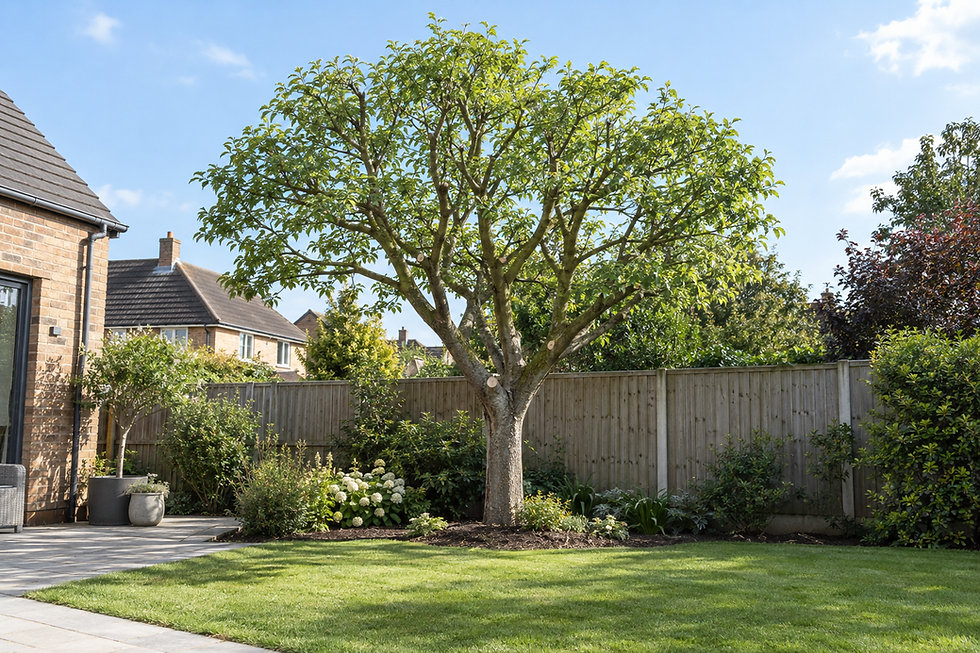

A precise treatment with future growth in mind
Reduction isn't the same as thinning, which removes selected internal branches while broadly retaining canopy size. It also differs from crown lifting, which creates room beneath lower branches, and from pollarding, which manages regrowth on an established cycle. We help you match the treatment to the actual problem. For a tree in Selsey that has become disproportionate to its garden, reduction may avoid complete removal while improving clearance and reducing end weight. The crown will grow again, so future inspection or repeat management may form part of a sensible long-term plan.
Frequently asked questions
Is crown reduction the same as topping?
No. Reduction uses selected branch unions to decrease crown dimensions while retaining a balanced framework. Topping makes blunt cuts without the same regard for suitable growth points or crown structure. We plan the cuts around the tree's form and condition.
Can reduction make any tree much smaller?
Not always. Species, condition, branch structure and the amount of live growth all affect what can sensibly be removed. We assess the tree and discuss a realistic finished size rather than promising a percentage that may not suit it.
Will crown reduction need repeating?
A reduced tree continues to grow, so later inspection may be useful. The timing depends on species, growth rate, the original reason for reduction and how the crown responds. We can explain likely maintenance needs after assessing the tree.