
Match repeat care to the tree's history
Pollard points identified
Established heads guide where cyclical regrowth should be removed.
Reduction kept distinct
A balanced size decrease is planned differently from repeat pollarding.
Old work informs new work
Previous timing and visible cuts help us choose a sensible maintenance method.
Keep established pollards on a sensible cycle
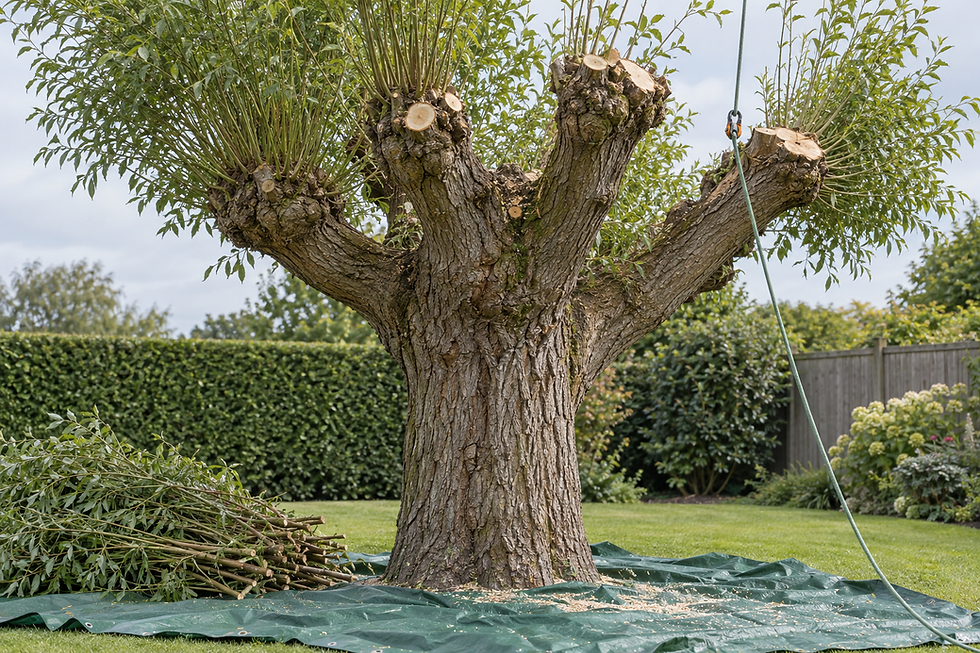
A pollarded tree produces fresh shoots from earlier cutting points, and those shoots become heavier as the cycle is delayed. Repeat pollarding removes regrowth back to the established heads rather than making unrelated cuts across the crown. We assess the previous points, tree condition and time since the last work. We travel from Selsey to carry out this maintenance at properties in Midhurst. Old photographs or details of previous pruning can be useful, particularly where vigorous regrowth now hides the original framework or the management history isn't immediately clear.

Use crown reduction for a different result
Crown reduction is not another name for pollarding. It selectively decreases height or spread through suitable branch unions while retaining a balanced canopy outline. This may suit a tree that has become too large for its setting but isn't on an established pollard cycle. For trees in Midhurst, we start with the outcome you need and the evidence of earlier work. Planned maintenance can then track regrowth, deadwood, clearance and old pruning points over time. Each treatment is defined separately so the tree isn't pushed into the wrong method simply because it needs to be smaller.
Frequently asked questions
What if we don't know when the tree was last cut?
We can inspect regrowth size, established points and the wider crown for clues. Photographs from earlier years may also help. The tree's current condition and structure remain more important than guessing an exact date.
Can crown reduction replace pollarding?
They are different treatments. An established pollard is usually managed through its existing cycle, while reduction follows suitable branches through a broader crown. We assess the history and desired outcome before recommending either method.
Why does previous pruning matter?
Old cuts influence current branch structure, regrowth and possible weak points. Understanding them helps avoid unnecessary new wounds and supports a coherent plan. Tell us about known reductions, pollarding or storm damage when you enquire.