
Focus the work on the actual crown problem
Density treated precisely
Thinning selects internal growth instead of shrinking the whole outer canopy.
Deadwood prioritised
Branches above busy parts of the property receive particular attention.
Access built into planning
Tree position and the ground below guide equipment and branch control.
Choose tree work that matches the crown
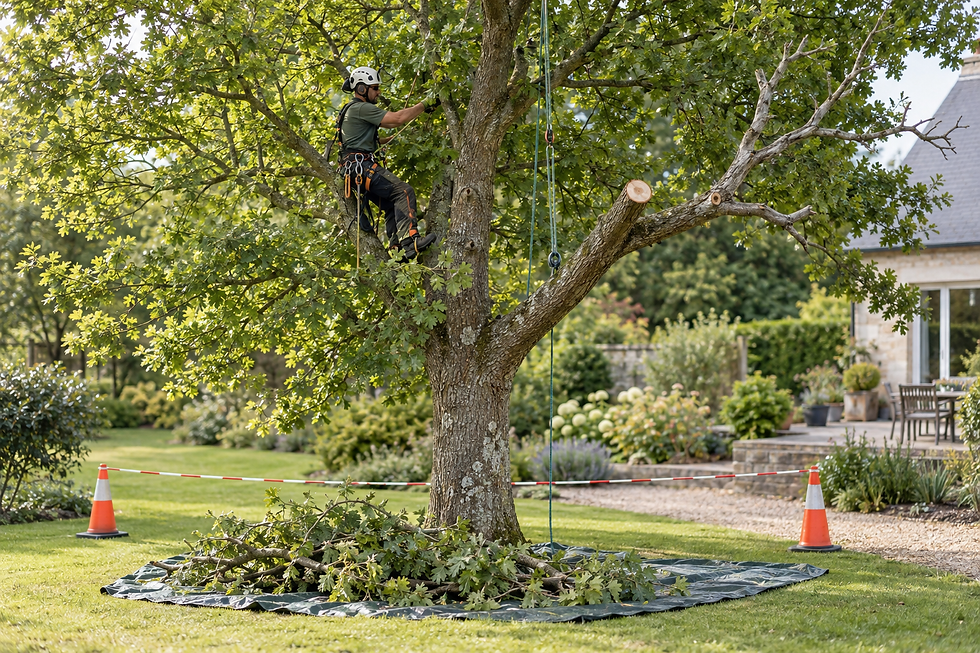
A dense canopy and a dead branch are different problems, even when both sit above the same patch of garden. Crown thinning selects internal growth to let more light through while keeping the tree's broad height and spread. Deadwood removal targets branches that have died and may deteriorate above paths, parking or buildings. We travel to Arundel for site-based tree surgery and assess branch position, crown condition and access before selecting an approach. This avoids using general cutting where a defined treatment would give you a clearer and more useful result.
Prioritise branches above well-used ground
The importance of deadwood depends partly on what lies below it. A branch above a quiet corner isn't the same practical concern as one over a drive or entrance. We assess diameter, height and deterioration, then consider how pieces can be controlled during removal. For trees in Arundel with crowded internal growth, thinning may also address crossing branches without making the outer crown smaller. If your real priority is reduced height or spread, we explain why another treatment may suit better. The quotation sets out the target branches and planned site outcome.
Frequently asked questions
Does crown thinning make the tree smaller?
It generally retains the tree's overall height and spread while reducing internal density. If you need less outer width or height, crown reduction is the more relevant treatment. We clarify the intended visual and practical result first.
Why are dead branches above paths a priority?
Their position increases the chance of falling material affecting people or property. Branch size and condition still matter, but frequently used ground raises the practical concern. We assess the crown and specify relevant deadwood for removal.
Can thinning and deadwood removal be combined?
They can form parts of one planned visit where both are suitable. We identify dead branches separately from live growth selected for thinning. This keeps the purpose and extent of each treatment clear in the quotation.